

Confirmation of citizenship · decided by Masovian Voivode
Polish citizenship by descent
Poland confirms citizenship for descendants of Poles, provided the chain of citizenship was never broken after 1920. Check whether you qualify, build your lineage, and get a primary-source-backed document checklist and cost estimate.

🇵🇱 An unbroken line
Polish citizenship passes down a chain that ordinary naturalization abroad doesn't break — the line is what matters.
Eligibility
Who may qualify
An ancestor who held Polish citizenship after 1920.
No intervening loss of citizenship in the chain (naturalization and military-service rules can break it).
Confirmation is decided by the Masovian Voivode in Warsaw, usually filed via your consulate.
A general overview — your eligibility depends on the specifics of your line. The free check gives a personalized answer. EasyPassport is not affiliated with Masovian Voivode. We help you organize and verify your documents. You submit your application to Masovian Voivode directly — we do not file, submit, or act on your behalf with any government authority.
Why Poland
What makes Poland different
No generational cutoff
Citizenship passes by jus sanguinis indefinitely — great-grandparent and further-back claims are possible as long as every link in the chain stayed intact.
Confirmation, not naturalization
The Masovian Voivode confirms a citizenship you've held since birth — there's no oath, residency, or language requirement.
Apply at any consulate
Unlike Italian consulates, Polish consulates impose no jurisdictional limit — you can file at any Polish consulate or the embassy in Washington, DC.
The zwolnienie rule protects most chains
Since 1951, naturalizing abroad alone doesn't end Polish citizenship — only a formal government release decree (zwolnienie) does, and most emigrants never got one.
By ancestor path
Your relationship to the Polish ancestor determines which rules apply
Through your parent
The simplest chain — most post-1951 naturalized parents retained Polish citizenship automatically.
See requirements 02GRANDPARENTThrough your grandparent
Requires verifying your intermediate ancestor never formally renounced (zwolnienie) Polish citizenship.
See requirements 03GREAT-GRANDPARENTThrough your great-grandparent
A three-generation chain — each intermediate ancestor must have retained citizenship.
See requirementsProcess
How to apply
- 1
Gather vital records
Collect long-form birth, marriage, and death certificates for each generation, your ancestor's Polish records (start with Szukajwarchiwach.gov.pl), plus US naturalization records (the USCIS C-file via a FOIA request).
- 2
Apostille your US documents
Get an apostille from the issuing state on each US vital and naturalization record; Polish records need no apostille.
- 3
Get sworn Polish translations
Use a tłumacz przysięgły — a sworn court translator registered with the Polish Ministry of Justice. Generic US 'certified' translations are routinely rejected.
- 4
Book a consulate appointment
Apply at any Polish consulate or the embassy in Washington, DC — there's no jurisdictional limit. Book through e-Konsulat.
- 5
Submit and pay the consular fee
Present your documents and pay the ~$118 confirmation fee, which is non-refundable even if the case is later denied.
- 6
Consulate forwards your file to Warsaw
Your complete package is sent to the Masovian Voivode (about 4–8 weeks in transit).
- 7
Voivode reviews the case
Review runs roughly 18–24 months; respond promptly to any wezwanie (request for more documents). Correspondence is in Polish and there's no in-person interview.
- 8
Pay the stamp duty and get your certificate
On approval, pay the PLN 277 stamp duty and receive your confirmation of Polish citizenship — then apply for a Polish passport (and optionally a PESEL number).
Choose your path
Do it yourself, or talk to a specialist?
Do it yourself
Free tool- Parent or grandparent claim with clear documentation
- You know your ancestor held Poland citizenship
- Records are legible and translated where needed
- No broken-chain events (renunciation, timing gaps)
Talk to a specialist
$149- Great-grandparent or further-back claim
- Unsure whether a naturalization broke the chain
- Mixed ancestry — multiple possible pathways
- Want a professional to verify before gathering 10+ documents
At a glance
What you'll need
- Government fee
- ~$118 USD + PLN 277 stamp duty when the certificate is issued
- Typical timeline
- ~18–24 months
- Where
- Masovian Voivode, Warsaw (filed through your consulate)
Key dates & laws
The rules that decide your case
The zwolnienie rule (post-1951)
Under the 1951 Act, foreign naturalization alone doesn't cancel Polish citizenship — only a formal release decree (zwolnienie) from the Council of State (later the President) does, and it was never automatic.
The Military Paradox (1918–1950)
Under the 1920 Act, loss on naturalization required a prior release from military duty — but consulates systematically refused these to men aged 18–50, making citizenship loss legally impossible for that cohort.
Foreign military service (1962 Act)
Voluntary service in a foreign army was its own chain-breaker — some Polish-Americans who served in WWII, Korea, or Vietnam may have lost citizenship without realizing it.
Marriage loss for women (1920–1950)
Under Art. 7 of the 1920 Act, a Polish woman who married a foreign man lost citizenship automatically at marriage; the 2009 Act fixed this going forward.
Pre-1918 emigration
Ancestors who emigrated and naturalized before Poland's independence in November 1918 generally never acquired Polish citizenship — the most common reason descendants of the 1880–1914 wave are ineligible.
Kresy (eastern borderlands)
Ancestors from places now in Ukraine, Belarus, or Lithuania need analysis of Soviet–Polish treaties and records split across archives; specialized review is recommended.
The chain must never have broken
Every intermediate ancestor must have held Polish citizenship when the next child was born; a single zwolnienie, Art. 7 marriage loss, or foreign military-service event breaks it for all descendants.
Where it's processed
A single national authority
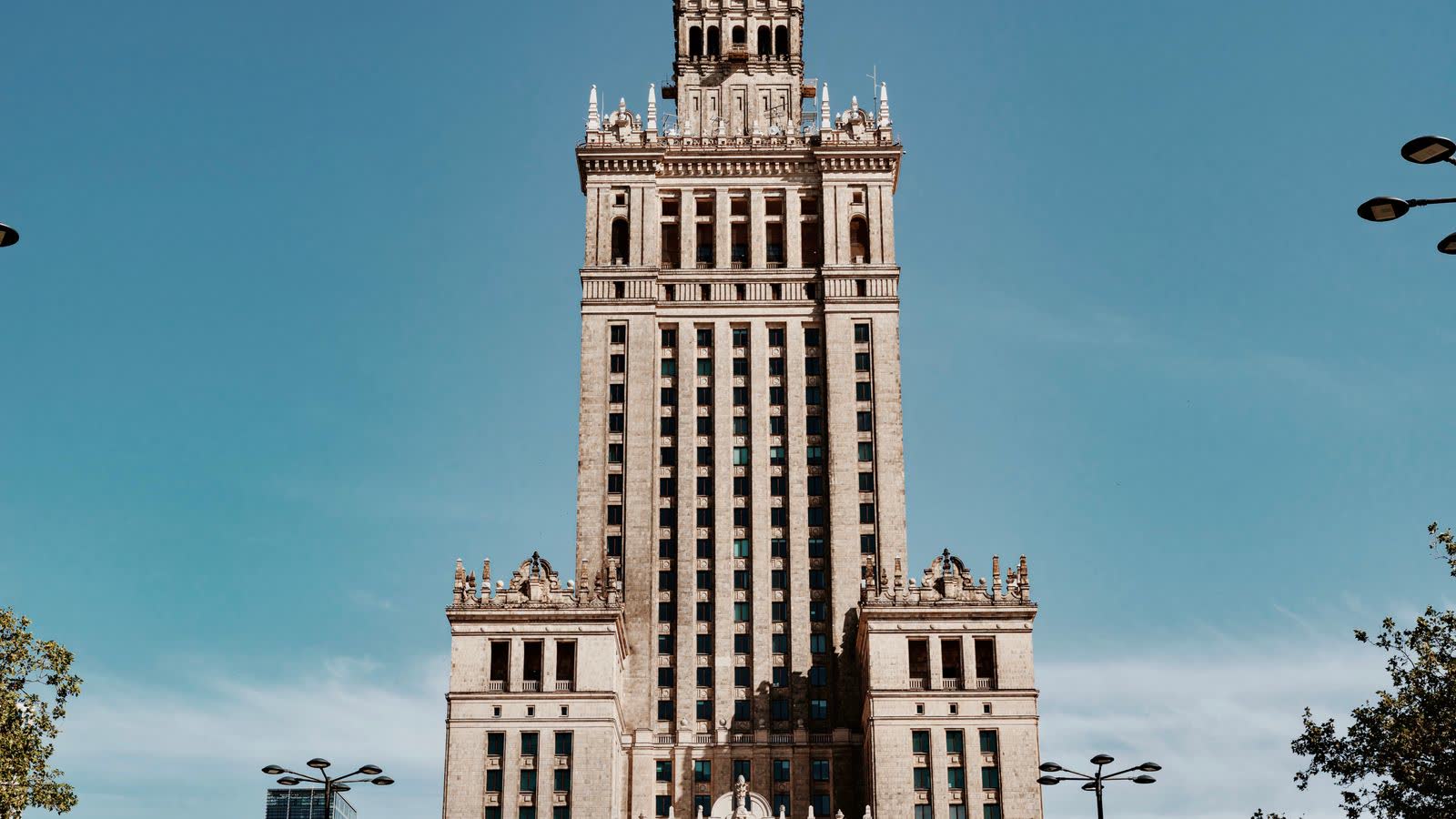
🇵🇱 Masovian Voivode
Warsaw
Poland processes descent applications centrally through one national authority, rather than routing them through consulates.
See mailing instructionsTools & guides
Plan your application
Poland articles
Latest from our editors
FAQ
Frequently asked questions

🇵🇱 Not sure where to start?
See if you qualify in about a minute.
A personalized answer based on your specific line of descent. No passport or ID uploads — ever.